$ cat ~/work/depostack.md
DepoStack
Independent software for the people who produce the record.
product waitlist open Status reviewed Role: Founder & builder
- what
- Independent legal-tech software
- principles
- On-device where implemented · vendor-neutral · human-accountable
- featured
- DepoAudio · CasePrompts
- access
- Product waitlist open · not immediate access
The problem
Many legal workflows still depend on per-seat pricing, cloud processing, or formats that require the originating vendor's software. That can leave the people who produce the record dependent on tools they did not choose.
The decision: an independent company with stated principles
DepoStack is the company name on my independent work, including tools I wished existed in court-reporting workflows.
On-device where implemented: DepoAudio processes supported audio locally. Vendor-neutral: the current tools are designed for workflows that can move between vendors. Human-accountable: the implementation changes by product, but the evidence and review boundary should remain explicit.
DepoStack adds one value of its own. Pro-first: product status and limitations stay visible for the people who produce the record.
What exists now
DepoAudio is the shipped one — a free, open-source desktop app that converts supported court-audio formats on-device. CasePrompts has a working free prompt builder and library built on the CITE method, with a separate Workbench still planned. CasePrompts is a commercial product direction with free public tools; that is a different model from DepoAudio's open-source release.
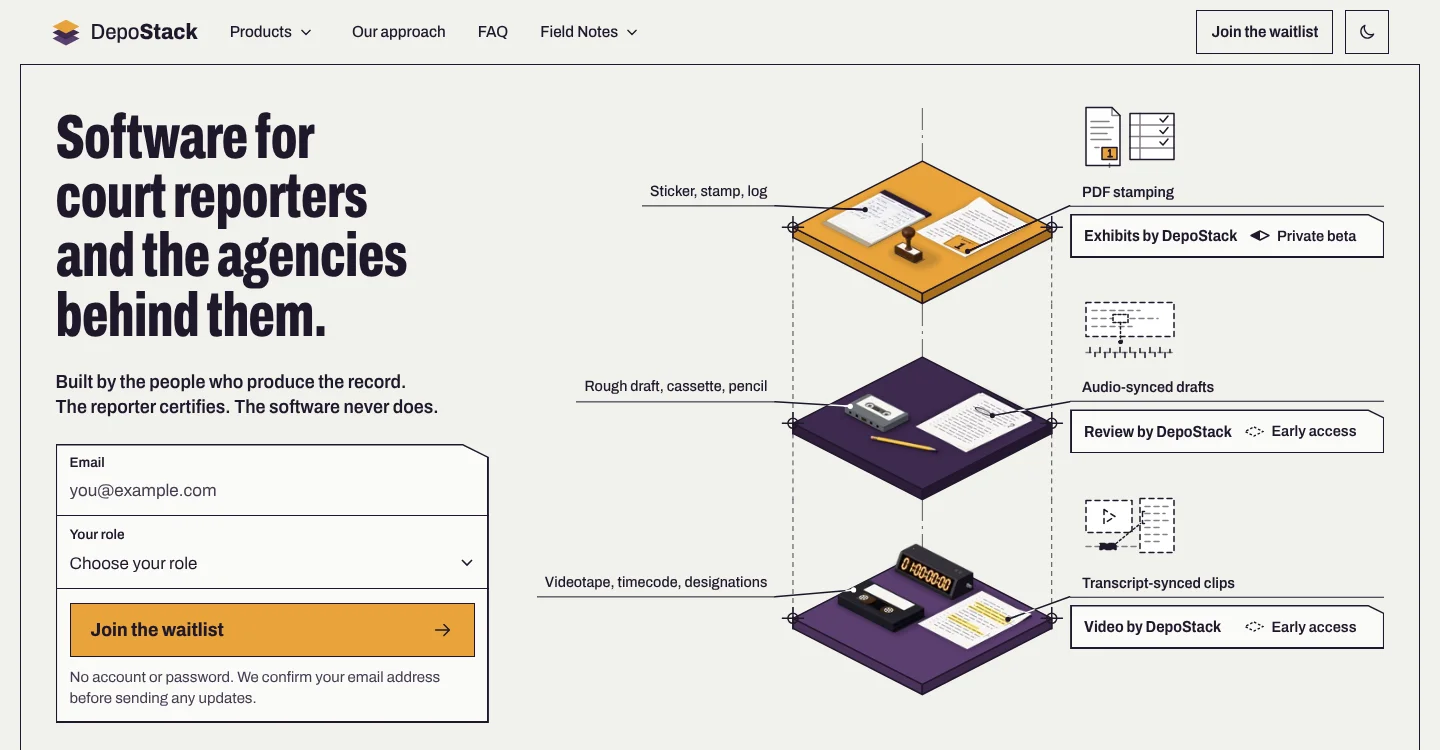
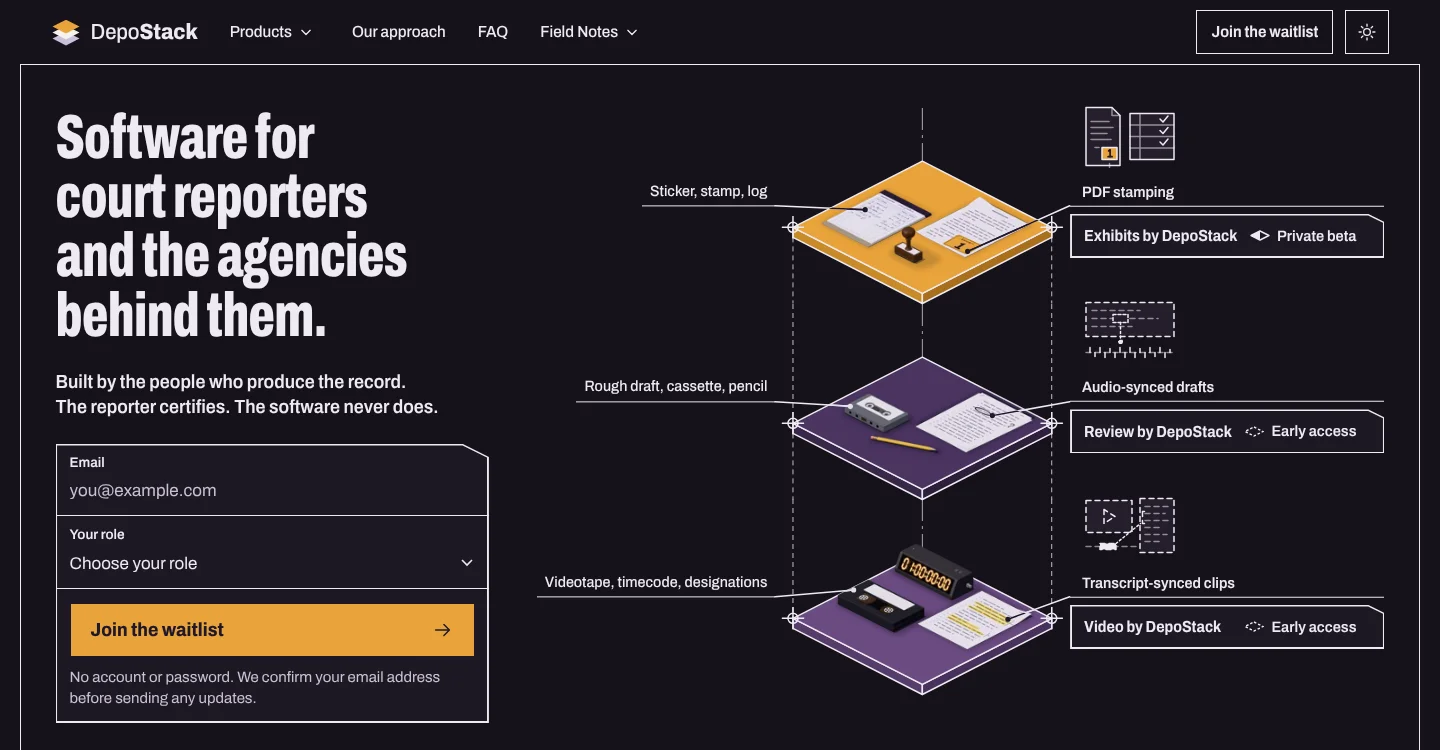
The wider product family is developing too: Exhibits is in private beta, while Review and Video are early-access explorations. Each product has its own availability and limits. The aim is the same: give the people who make the record tools that respect the record.
What's next
The DepoStack waitlist collects workflow interests for product and research updates. Signing up is an expression of interest, not immediate access to every product. Product status and source links stay visible as the work changes.
It is a long game: earn trust by shipping useful, honest software and stating its limits.
Evidence